Friday, February 10, 2012

Charles Dickens' Last Work: The Mystery of Edwin Drood

Old-Fashioned Charm

If you read many novels by Charles Dickens or see adaptations of his books you'll soon discover that he is a king of the mystery story! The twists and turns in his plots continually surprise and delight! 
In 1870 Mr. Dickens, the experienced writer, sat down to write a new murder mystery story which would not be solved in his lifetime.

I have not read The Mystery of Edwin Drood but have done a bit of research and am definitely adding it to my reading list!


History: The Mystery of Edwin Drood was published, like many of Dickens' other novels, in a monthly serial form starting April 1870. But by September 1870 only six parts of the twelve parts were published and the news that Mr. Dickens passed away in June meant that the story would not be finished. Just imagine how readers in that day would have felt - not only was the murder of your favorite serial story not to be brought to justice but the world had lost one of the greatest writers of all time!
It is reported that Mr. Dickens had put in a full days work on The Mystery of Edwin Drood when he passed away on June 9th, 1870. But he unfortunately left little idea as to how the story would end.
In 1898, twenty-eight years after Mr. Dickens' death, his son Charles Dickens Jr. and his good friend mystery writer Wilkie Collins collaborated on John Jasper's Secret: Sequel to Charles Dickens' Mystery of Edwin Drood.


Story: The Mystery of Edwin Drood centers around the life and death of the title character. Edwin Drood (called "Ned" by his uncle) is an orphan who lives with his uncle in the sleepy cathedral town of Cloisterham. Edwin is shortly to come of age, at which time he will follow his deceased father's desires to work as an engineer in his Egyptian firm and to marry young Rosa Bud. His uncle, John Jasper, is the choirmaster at Cloisterham Cathedral and although he seems to encourage his nephew's plans he has a darker side rooted in opium addiction and jealousy of Edwin's engagement to the pretty Rosa.
Rosa is a spirited young lady just about to finish her training at a school for young ladies. Although she and Edwin respect their two father's wishes that they would marry she also feels that their regard for each other is waning. When siblings Neville and Helena Landless arrive from Ceylon, Rosa and Helena quickly make friends and Neville falls in love with her. Edwin's discovery of Neville's regard for his fiancee leads to a confrontation which almost comes to blows but the young men reconcile their differences. The next day Edwin Drood mysteriously disappears and although his body is not found Neville is soon suspected of murdering him! With strange disappearances, midnight visits to graveyards, sinister lyme pits, jealous uncles and mysterious strangers The Mystery of Edwin Drood must have kept readers in 1870 on the edge of their seats!
____________________________________________________

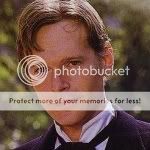
David Manners as Edwin Drood & Heather Angel as Rosa Bud

Having a great interest in the story I was quite pleased to find this black & white classic available for viewing on YouTube (Part 1 here). The story line seems to stick pretty well to the original work and they finish it with a sweet and interesting ending. I highly recommend this film to anyone interested in a general idea of the story or old movies. It deals very generally with John Jasper's opium addiction (something I worry about in later films) and there no language, inappropriate scenes and only a bit of theatrical violence. Rosa Bud and the Landless siblings are interesting characters and there are some very sweet scenes.  

More Photos:

____________________________________________________

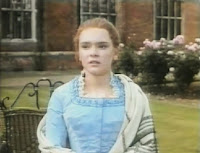
The Mystery of Edwin Drood (1993)
This version isn't readily available but I did find a fan of the actor Robert Powell (he plays Mr. Jasper) who had put up this YouTube video with clips from the film. Overall it seems a bit over dramatic to me with it's creepy music and funny drawn out acting. But it is longer and does seem close to the book. I'd be interested in watching the whole thing.
An interesting fact is that the young actress, Finty Williams, who played Rosa Bud in this version is the real life daughter of talented actress Dame Judi Dench!
Stars: Robert Powell, Finty Williams, Jonny Phillips, Rosemary Leach.

More Photos:
 

____________________________________________________

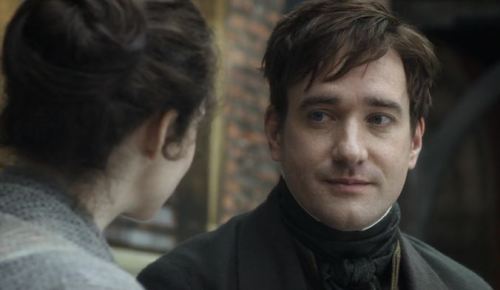
Hearing about the making of this film was what really got me interested in the story of Edwin Drood. This filming aired in January on BBC and will come to the USA in April 2012 on Masterpiece Theatre.
The talented cast is enough to make me want to see it but the fact that it's a Dickens adaptations is even better! According to this article from The Guardian Online this new adaptation is shown in two parts, the first part is from Charles Dickens' original work and the second part was written by modern day mystery writer Gwyneth Hughes.
I haven't seen it this adaptations yet but Abby at Newly Impassioned Soul has seen it and wrote this lovely film review that I encourage you to check out if you're interested. And I'll post a review as soon as I get a chance to view it. 

More Photos:

____________________________________________________
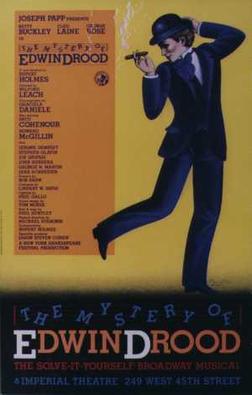
Musical Version: Apparently there is a musical based on The Mystery of Edwin Drood which debuted in 1985 and was quite popular on Broadway. It is titled simply Drood and has different endings based on the audience's votes (during the play) of who they thought the murderer and the mysterious character Dick Datchery were!

I found this bit from Wikipedia's page on Edwin Drood intersting so I'm quoting it here:

"The first modern major theatrical adaptation was a musical comedy with book, music, and lyrics by Rupert Holmes. The production, originally known by the full name of The Mystery of Edwin Drood, but re-titled halfway through its original run to simply Drood, was first produced in 1985 by the New York Shakespeare Festival, and then transferred to Broadway, where it ran for 608 performances (and 24 previews). It won five 1986 Tonys, including Best Musical, as well as Drama Desk and Edgar awards. The musical has since played successfully in numerous regional and amateur productions.
Because Dickens's book was left unfinished, the musical hinges upon a novel idea: the audience decides by vote which of the characters is the murderer. The musical's suspect pool includes John Jasper, Neville Landless, Rosa Bud, Helena Landless, Rev. Crisparkle, Princess Puffer, and Mr. Bazzard. Adding further interactivity, the audience also chooses either Rosa Bud, Neville Landless, Helena Landless, Rev. Crisparkle, and Mr. Bazzard to play the role of Dick Datchery since the cast votes that Edwin Drood actually was murdered and cannot be Dick Datchery. As well, one male and one female character are chosen to develop a romance together: Holmes wrote brief alternate endings for every possible voting outcome, even the most unlikely."


How neat is that! There was also a record album that allowed the listener to solve the crime themselves by choosing which song tracks to listen to!
____________________________________________________

Quotes: As I was watching a clip from the 1993 adaptation I came across this line and so looked it up in an e-text of the book. 


"How beautiful you are! You are more beautiful in anger than in repose. I don't ask you for your love; give me yourself and your hatred; give me yourself and that pretty rage; give me yourself and that enchanting scorn; it will be enough for me." - John Jasper, The Mystery of Edwin Drood, Chapter 19


It always makes me a bit  aggravated when men tell ladies they are prettier when they're angry and I've never thought that was really true. But if Dickens thought so perhaps it is true. How... aggravating! :)
____________________________________________________


Are you looking forward to the new adaptation?

Thursday, February 9, 2012

Check Out This Game


Sarah Grace of Reliving A Legacy had made a Charles Dickens Unscramble Game which I encourage you to check out! 
Some of the puzzles were a bit tricky but very interesting! 


Guest Post: The Dickensian Heroine by Melody

Old-Fashioned Charm

Some time ago I thought to myself that most of the female main characters in Charles Dickens's novels seem to have similar dispositions and virtues: they are sweet and benevolent, self-sacrificing and kind, gentle and morally upright; several are clever and discerning. Many of them also seem to love their heroes quietly and are unsure of their feelings being returned - or in the cases of Amy Dorrit and Agnes Wickfield, watching the men they love pursuing someone else.

I find it quite interesting to look at the patterns and similarities between these heroines; and then look also at the very different Bella Wilfer, and the shockingly different Estella Havisham. Here I shall make a list of the heroines, with descriptions of their individual stories and comparisons between them all.

I am, sadly, a rather ill-educated Charles Dickens admirer at this point, in that I've barely read any of his books, so this will all be based on what I know from watching the film adaptations. 

The Typical Dickensian Heroine

Amy Dorrit, Little Dorrit

  Amy is, I think, the ultimate emblem of the Dickensian heroine, and one of my favorite literary heroines. She truly is to be admired, and makes an excellent role model. 

     Amy's circumstances are very difficult. Her father has been in a debtor's prison from around the time of her birth, and she grows up taking care of him; pretty much the rest of her family, too, who are all selfish, demanding, and just plain aggravating. Except for nice Uncle Frederick, who doesn't live with them; I only meant her father, brother, and sister. 
     She is ever obedient, patient, and kind, showing real strength of character when her circumstances must be excessively hard to bear. 
     Then she meets Arthur Clennam (whose character is also exemplary), a man who tries to help her and her family and is very kind to them, despite her father's practically begging for money, and her rude brother.
     Speaking of which, I love the part where she stands up to her brother "Tip" and tells him what's what. That's the spirit. He needs to be yelled at.
     Anyways, back to Arthur. Amy falls in love with him, as we all expect; although apparently it's quite lost on Arthur because he doesn't know until someone tells him. Alas, Arthur is taken with a sweet but shallow young woman who, fortunately for him I'd say, becomes engaged to someone else before he proposes. At least he knew the girl before he knew Amy, and at least he didn't marry her...unlike a Certain Other Charles Dickens hero who shall remain nameless. 
     Then comes the big news. (If you haven't seen/read Little Dorrit yet and don't want the surprise spoiled, I suggest you stop reading here and skip down to Esther.) Arthur meanwhile has asked a certain Mr. Pancks to find information about the Dorrits, and he uncovers the fact that Mr. Dorrit is heir to a fortune. Whereupon Mr. Dorrit, now very wealthy, is released from prison, becomes ridiculously conceited, and they all go off on a grand tour of Italy along with the excessively irritating Mrs. Genral, who is engaged by Mr. Dorrit to teach Amy and her sister Fanny the ways of gentility. 
     Poor Amy. I feel sorry for her when they are poor and she is stuck caring for her father; but when they're rich, suddenly nothing she does is good enough for her family, even though she tries desperately hard to please them. Her goodness and patience show more and more the further it is required. One especially trying situation is how Mr. Dorrit feels himself above Mr. Clennam, whom they owe the discovery of their fortune, and demands that Amy have no association with him, or anyone else from their past - which was her entire life. 
     After all this and more, the happy ending comes: Amy and Arthur are married, and everything is as it should be.
     Amy is one of the few heroines in Charles Dickens's novels where the main character is a girl. Another one is...

Esther Summerson, Bleak House

I always see lots of similarities between Esther and Amy. Not only are they practically the only two females who are the main characters in any of Dickens's stories, they both come from hard backgrounds, tragically lose some parent or other, and are pursued and proposed to by men they do not love. (Only in Esther's case, the man is a little creepy.) They both go through many hardships and are required to be strong, and suffer grief and uncertainty about the men they love. Actually, many of the heroines have these things in common. But I'll get to that later.
Esther, a girl of unknown parentage, is raised for some time by a woman who is cruel and seems to despise her; then she is sent away to school. Fortunately for Esther, a kind gentleman by the name of John Jarndyce becomes her guardian. At the age of 21, she meets the wards of the famous (or perhaps infamous is a better word) Jarndyce case - a court case about a will, or rather more than one. Ada Clare and Richard Carstone are due to get money if and when the real will is discovered. Mr. Jarndyce is their guardian as well, and Esther is engaged by him to be Ada's companion. They all go to live with him at Bleak House.
Mr. Jarndyce is as gentlemanly as they come - kind, considerate, friendly and agreeable. Though more than old enough to be her father, Mr. Jarndyce comes to love Esther and eventually proposes marriage. She accepts even though she is interested in someone else: a Mr. Woodcourt, who has gone off to sea as a doctor and who knows when he'll be back. She has a few reasons for thinking he couldn't care for her, and she respects Mr. Jarndyce and says she thinks she would come to love him.
During the course of the story, Esther undergoes a severely dangerous disease, is stalked by the above-mentioned creepy guy, finds out who her mother is under very trying circumstances, sees people she cares about die, as well as constantly sharing other people's burdens. (This story isn't all doom and gloom, though; it has it's light points. I do not wish to mislead you.) Then of course there is the Woodcourt/Jarndyce issue. After accepting Mr. Jarndyce, Mr. Woodcourt comes back and, surprise! he wants to marry her. Which puts Esther in a very awkward situation. She refuses Mr. Woodcourt as a lady of honor and constancy would. Of course she ends up with Mr. Woodcourt in the end, because Mr. Jarndyce decides to release her from the engagement.
Putting the age difference problem aside, I always prefer Mr. Jarndyce. He's just so... nice. Poor guy... I suppose Mr. Woodcourt was best suited for Esther, though.
Esther certainly meets the criteria of a Dickens heroine in being selfless, kind, considerate, honest, etc.: although she isn't as meek as some of the others.

Lizzie Hexam, Our Mutual Friend

Though Lizzie isn't technically the heroine of Our Mutual Friend, she definitely has the makings of a Dickensian heroine and deserves to be classed with them.

     Lizzie has a situation similar to Amy's in some ways; she is without a mother and cares for her father before he dies, living in quite poor circumstances. Although, rather than her father being in prison for debt like Mr. Dorrit, Lizzie's father works pulling dead people out of the river and is reputed to be a criminal. She sends her younger brother off to school so he can avoid any scandal, and is rewarded for her considerate treatment by his becoming puffed up, and later breaking with her because she shames him and refused to marry his schoolmaster, who, according to him, would put her in a good situation. This man is more than creepy though; he's insane. Fortunately Lizzie is wiser than her brother. 
     Lizzie, like Amy and Esther, falls in love with a man higher in position than herself. Lizzie's case is much more extreme though, for Eugene Wrayburn is the sort who mixes with society and is referred to as a gentleman, whereas she is a boatman's daughter and later on a factory worker.
     So, there is that silent love theme again, and she ends up with him in the end, as generally happens with the Charles Dickens ladies. (The author isn't always as kind to his gentlemen, though...)

Agnes Wickfield, David Copperfield

Agnes fits right into the mold with the others mentioned so far, especially Amy and Lizzie, except her father is a goodly gent and they are more well-to-do. She has no mother, though, and does take care of her father in a sense. She is also pursued by someone undesirable, as Esther and Lizzie are (although Esther's case wasn't as bad). The man is Uriah Heep, the villain of the story, and quite creepy - in a slimy sort of way - as well.

     There's also the 'silent love theme' in this story, although I must say Agnes has it the worst of them all. She grows up loving David, but he pulls the old "she's like a sister to me" trick and she has to look on as he falls for a silly airhead, when Agnes is so obviously the perfect match for him. (What? I'm irritated? Why on earth would you think that? Heh...) At last, in the end, all turns out well and he marries the ever-forgiving and generous Agnes.
     She has all the Dickensian heroine traits - sweet, selfless, gentle, patient, kind; she is also very perceptive, unlike her beloved. 

Madeline Bray, Nicholas Nickleby

And here we have it again; a caring, motherless girl who takes care of her father and is rather poverty stricken. Mr. Bray has to be the worst of the fathers, though. Mr. Dorrit and Mr. Hexam at least had some sort of affection for their daughters; this one is more of a villain. He's selfish through-and-through, demanding, and pretty much just evil, agreeing to marry Madeline off to a man (who is, incidentally, another villainous person) in exchange for settling his debts, without a care for her.

     He conveniently dies before the evil event takes place, fortunately. She would have done it, though, which I think is taking her love and obedience a little too far.
     But anyways, there's always Nicholas around to save the day. In this story, the romantic element is quite different than in the others, because Nicholas falls for her from the beginning, doesn't attempt to hide it, and is always trying to help and protect her. She loves him, too, and the story's ending is thoroughly happy.

Mary Graham, Martin Chuzzlewit

Mary, an orphan, is employed as companion to an old man named Martin Chuzzlewit. She possesses most of the Dickensian heroine traits, as well as being very beautiful. 

     A nice man named Mr. Pinch falls in love with her, but she is already engaged to young Martin Chuzzlewit, grandson of the other one with that name. The match, however, is forbidden by old Mr. Chuzzlewit.  
     Mary has most of the circumstances, too: a sweet disposition, an old man she takes care of, a man she loves but can't marry, another lover who is rather too old for her but very good, and there's also the situation of the not-good, rather creepy guy who wants to marry her.  
     I never cared much for young Martin; he does improve, but he rather annoys me. I like Mr. Pinch's character much better, even if he is balding rather before his time. Ah well, such is life...er, Dickens. 

And More of the Same Sort

Lucie Manette, A Tale of Two Cities
I don't know very much about this young lady, as I haven't read all that much of the book yet, and haven't seen any of the adaptations. She seems to be a true Dickensian heroine, though; gentle, sweet, young, beautiful, motherless, taking care of her father (the circumstances there are very interesting), and more than one young man is in love with her.

Nell Trent, The Old Curiosity Shop
Nell is technically one of the heroines, I suppose, but she's only 14 and dies at the end of the story. (I am not at all fond of the main character in a story dying.) She fits in with the rest, though: both her parents are dead, she lives with her grandfather, they haven't much money, and her brother is a jerk. She's timid, gentle, etc. 

Kate Nickleby, Nicholas Nickleby
I didn't mention Kate earlier because she isn't really one of the heroines; she's the hero's sister. However, she's a main character so I'll mention her here anyways.
     At the beginning of the story, Kate and Nicholas lose their father, and have to go to London to seek help from their uncle. He finds them both positions instead, though Nicholas's isn't good and the uncle turns out to be a villain. He allows and even encourages an acquaintance of his to behave improperly towards Kate, but when Nicholas finds out he sweeps her and their mother away from the evil uncle. 
     Here again we have a dead parent, and also in the story is a young man who quietly worships Kate, though it's unlike any of the other situations because rather than too old for her, he is quite young. And a creepy man pursues her, as I mentioned.

Ada Clare, Bleak House
Esther Summerson is the heroine of this story, but Ada plays a large part in it. Though she isn't a perfect Dickensian heroine, she has many of the qualifications. 

The Exceptions
For all Charles Dickens's uniformity when it came to creating heroines, he did make a few exceptions. Here are two of them.

Estella Havisham, Great Expectations

Estella is just about as different as possible to the other heroines. I suppose it wasn't completely her fault as she was raised to be the way she is; but then, the Dickensian heroines didn't have the greatest backgrounds, either. Estella is mean, cold, and selfish; rather than falling in love with a man she can't marry, it happens the opposite way; and Estella actually marries her creepy pursuer. The man who falls in love with her but can't marry her is "Pip," the main character in the story.

    Estella was adopted by Miss Havisham and trained to be the way she became. Miss Havisham, a man-hater, wanted Estella to be a heart-breaker. 
     In the new mini-series, I found Estella a bit more likable than in the 1999 adaptation. She improved a little, and seemed better deep down inside.  
     Though they never marry during the story, things look hopeful for her and Pip at the end.

Bella Wilfer, Our Mutual Friend

Though Bella isn't anything like Estella, she's not the usual Charles Dickens heroine, either. She couldn't be called sweet, gentle, or patient, and at the beginning of the story she isn't very exemplary, either. She's impertinent, proud, values money too highly, and is rather snide sometimes to her poor admirer Mr. Rokesmith. 

     Both of her parents are living, and though she considers her family to be poor ("degradingly poor"), her father has a respectable position in business.
     She was engaged to marry a man named John Harmon, whom she had never met, and whose father specified in his will that he had to marry her in order to get his inheritance. 
     John Harmon, however, was found drowned, and the fortune went to Mr. and Mrs. Boffin, an older couple who previously worked for old Harmon .
     The Boffins kindly invite Bella to live with them; keep them company, and join them as they go into society. She accepts, and after seeing what money can do, she soon decides that she must marry someone rich.
     Which is bad news for Mr. Rokesmith, Mr. Boffin's secretary, who falls in love with Bella - and has a secret or two hidden away. It all ends perfectly though.
     As I said earlier, Bella improves. Really, all along she had a good heart, it just took some things to bring it out in all areas of her life. I would call her a sweet girl by the end (as well as quite amusing the whole way), and she's one of my favorite Dickens heroines.  


Regency Delight ~Jane Austen, etc.~

Melody is the author of Regency Delight where she bogs about all things Jane Austen, classic literature and period dramas related. Her sweet Charles Dickens posts include reviews of Little Dorrit (2009), A Christmas Carol (1984), Nicholas Nickleby (2002) and a guest post review of Bleak House (2005).

Thank you Melody for taking time to put together this delightful post and for sharing about your favorite Dickensian heroines!

Now, dear readers, it's your turn:
Which Dickensian heroine is your favorite?

Wednesday, February 8, 2012

My Tag Questions Answers

Since there's two sets of Charles Dickens tag questions circulating I decided to combine my answers into one post.

Old-Fashioned Charm


1. How were you first introduced to Charles Dickens?
Probably through A Christmas Carol, either seeing a film adaptation or I remember my mom reading a bit to us one year close to Christmas. Also through the musical Oliver! which I've watched several times through my growing-up years.

2. Which Charles Dickens novels and stories have you read? Which are your favorites?
I have read A Christmas Carol twice and I'm in the middle of reading A Tale of Two Cities. I've also read a few chapters of Bleak House and Nicholas Nickleby but mostly for research.

3. Which Charles Dickens novel(s) do you most want to read?
Great Expectations. I'm planning on reading that right after I finish A Tale of Two Cities. I also really want to read Little Dorrit now because I keep hearing how good the book is! :)

4. What are your favorite Charles Dickens quotes (up to three)?
"Heaven knows we need never be ashamed of our tears, for they are rain upon the blinding dust of earth, overlying our hard hearts." - Charles Dickens, Great Expectations

All of A Christmas Carol is very quotable (even Scrooge's "Bah Humbug" and "There's more of gravy than of grave about you.") but this is a favorite:
"But I am sure I have always thought of Christmas time, when it has come round -- apart from the veneration due to its sacred name and origin, if anything belonging to it can be apart from that -- as a good time: a kind, forgiving, charitable, pleasant time: the only time I know of, in the long calendar of the year, when men and women seem by one consent to open their shut-up hearts freely, and to think of people below them as if they really were fellow-passengers to the grave, and not another race of creatures bound on other journeys. And therefore, uncle, though it has never put a scrap of gold or silver in my pocket, I believe that it has done me good, and will do me good; and I say, God bless it!" - Scrooge's nephew Fred, A Christmas Carol

And I recently found this one and rather liked it:
"Have a heart that never hardens, and a temper that never tires, and a touch that never hurts."

5. Which Charles Dickens film adaptations are in your top three favorites? (If you've never seen one which three film adaptations do you most want to see?)
I have seen lots but my favorites still are:
Little Dorrit (2009)
Bleak House (2005)
Our Mutual Friend (1998)

And I really want to see the new adaptation of Edwin Drood and the 1994 version of Hard Times.

6. Who are your Top 3 favorite Dickens heroines? and why?
Esther Summerson - Kind, sensible, very bright and stands up for herself and her friends.
Amy Dorrit - Very sweet and caring and loves her family very much.
Bella Wilfer - At the beginning she's a bit selfish but her true good, faithful nature comes out in the end.

7. Who are your Top 3 favorite Dickens heroes? and why?
Arthur Clennam - Honest, kindhearted, honorable, generous, selfless.
John Harmon - Sensible, loving, generous, true-hearted friend, brave.
Nicholas Nickleby - Kind, honorable, brave, stands up for others and defends his sister's honor.

8. Which three Dickens villains do you most love to hate?
Mr. Smallweed - He's slimy, rude and greedy but he always makes me laugh!
Mr. Tulkinghorn - Such a black-hearted villain but he tries to convince himself and everyone else that he's acting for honorable reasons.
Rigaud - A murderous villain with a truly black heart but he moves the story of Little Dorrit along and he occasionally says some ironic things.

9. Which Dickens characters (up to three) do you find the most funny?
Mr. Smallweed - Even though he's a villain his comments are so hilarious!
Flora Finching - Her expressions and silly blunders are a bit annoying but so funny!
Fanny Squeers - She's quite ridiculous but in the movie adaptations she always makes me laugh. :)

10. If you could authorize a new film adaptation of one of Dickens's novels, which would it be and why?
I think we need a new adaptation of  A Tale of Two Cities because there hasn't been one since the 1980's. It needs to be properly redone but it would probably be quite expensive because of the epic-ness of the tale!

11. If you could have lunch with Charles Dickens today, what question would you most like to ask him?
I'd ask him how he came up with such interesting names for his characters because I love how each name can sometimes be ridiculous but also fits each individual character perfectly!

12. Have you ever read a Dickens biography or watched a biographical film about him?
I have seen a couple of documentaries about him and a few re-enactments of his final readings.


1. How were you first introduced to Dickens?
See my answers above.

2. Which is your favorite Dickens novel?
Right now it would have to be A Christmas Carol but only because that's the only book I've read all of. But I'm liking A Tale of Two Cities and I'm prepared to love his other novels when I read them!

3. How many Dickens adaptations have you seen?
Loads! It's something like 27 adaptations but I might have forgotten one or two. A couple of older adaptations I've only seen bits of.

4. Which Dickens adaptation is your favorite?
Probably Little Dorrit (2009), I love it more and more each time I watch it!

5. Have you seen multiple versions of A Christmas Carol? Which version is your favorite?
Yes, I've seen four adaptations. My family favorite has always been Muppet Christmas Carol because it's fun but keeps the spirit of the book and most of the original story. I also really enjoy A Christmas Carol (1984) which I saw for the first time this past Christmas.

6. Who is your favorite Dickens hero and (if applicable) who does your favorite portrayal of him?
Arthur Clennam as portrayed by the amazing Matthew Macfadyen

7. Who is your favorite Dickens heroine and (if applicable) who does your favorite portrayal of her?
Amy Dorrit as portrayed so amazingly by Claire Foy

8. Who is your favorite Dickens villain and (if applicable) who does your favorite portrayal of them?
Mr. Smallweed as portrayed by

9. Have you seen any musical adaptations of any of Dickens’ stories? If so, which is your favorite song from it?
I've only seen A Christmas Carol: The Musical (2004) and Oliver! which is my favorite. My favorite song from Oliver! is probably "Consider Yourself" or "I'd Do Anything". It is a lovely musical and I love the old film version of it. I didn't know there were many musicals of Dickens stories but now I'll have to look out for more.

10. Do you have a favorite Dickens quote? If so, what is it?
See quotes above.

Guest Post: What Makes a True Hero? by Miss Dashwood

Old-Fashioned Charm

"There is one thing, Emma, which a man can always do, if he chuses, and that is, his duty..."
~Mr. Knightley, Emma (Jane Austen), ch. 18

Miss Laurie has kindly asked me to write a guest post for her Charles Dickens Birthday Week, and I was quite happy to oblige.  Thank you for the opportunity, Miss Laurie!  I've decided to compare three Dickens heroes (Arthur Clennam of Little Dorrit, John Jarndyce of Bleak House and John Harmon of Our Mutual Friend) and take a look at the similar characteristics that make them all real gentlemen and true heroes.  For each character trait, I'll describe how each hero exemplifies that trait and pick a "best one". At the end of the post, I'll announce which character most deserves the title of hero--it'll be a mini-tournament of sorts.

The first character trait I want to address is kindness.  It's been said that "kindness is the only language that the blind can see and the deaf can hear."  In Little Dorrit, Arthur Clennam's kindness is most clearly shown in his behavior toward the Dorrit family.  Seeking to right a wrong that he believes his family has committed against the Dorrits, he employs a detective to research their family's past and try to get them out of debtors' prison.  Meanwhile, he also quietly pays Edward ("Tip") Dorrit's debts, even though Tip is an undeserving character who is frequently rude to Arthur.

John Harmon, alias Julius Handford, alias John Rokesmith, the hero of Our Mutual Friend (OMF), is a confused young man trying to make his own way in the world.  In order to claim his inheritance from his late wealthy father, he must marry a young woman (Bella Wilfer) who he has never met, but on his way to see her, he goes missing.  Presumed drowned by his acquaintances, he takes a false name and employs himself as secretary to Nicodemus Boffin, the man next in line to receive old Mr. Harmon's inheritance.  John is so hard to understand in the beginning stages of the novel (especially since Dickens kept switching from alias to alias--obviously quite fond of the letter J) that I think I'm just going to skip over him for this character trait.  Really, the best words to describe John in the first half of OMF are "cautious", "reserved" and "mysterious."

Denis Lawson as Mr. Jarndyce
In Bleak House, Mr. John Jarndyce exhibits kindness to nearly everyone he meets.  He has a legal duty to care for his wards Ada Clare and Richard Carstone, but no real obligation toward orphaned Esther Summerson.  Yet he employs Esther as a companion for Ada because he fears Ada might be lonely.  Jarndyce frequently uses his wealth to help those in distress, always trying to keep himself out of the limelight.  Vladimir Nabokov, a prolific Russian novelist, once described Jarndyce as "the best and kindest man to ever appear in a novel."  I would have to agree, and for this reason I name Mr. Jarndyce as the kindest of the three heroes I'm comparing.

Next on my list is honesty.  In Mr. Jarndyce's case, honesty is simply a way of life.  In sharp contrast to his leech-like "friend" Harold Skimpole, Mr. Jarndyce would never dream of deceiving anyone, for any reason.  When he begins to harbor romantic feelings toward Esther, he tells her truthfully and straightforwardly, accepting the fact that she may very well refuse him.

John Harmon, unfortunately, is not quite so honest as the other John.  (Hope you've noticed by now that I'm referring to John Harmon as simply John, while referring to the hero of Bleak House as Mr. Jarndyce or simply Jarndyce.  In doing this I, sadly, risk provoking Emma Woodhouse to wrath--"Never met him before in her life and she calls him 'Jarndyce'!")  Ahem.  Moving on... John Harmon's life in England is a Very Tangled Web of Deceit.  (Tsk, tsk.)  When he first emerges from the depths of the deep, dark, dank river (duhn-duhn-duhn!!) he takes the name of Julius Handford to disguise his real identity, and when he gets Mr. Boffin to hire him as secretary, he acts under the alias of John Rokesmith.  One might argue that he is doing all this as a way to see the truth about the Boffins and how they will handle their inheritance, and therefore his motives are worthy.  I certainly don't blame John for wanting some answers, but I can't condone his deceit in trying to find answers.

Matthew Macfadyen
as Arthur Clennam
Arthur, however, seems to be the very epitome of honesty.  Seeking to find the truth behind his father's mysterious dying words, he goes to great lengths to unearth anything that might reveal the truth.  He knows that there may be some secret that would prove detrimental to the House of Clennam, but he is willing to risk his own reputation in order to know the truth.  "'Pon my soul, you can't just barge in here saying you want to KNOW, you know," Tite Barnacle Jr. announces pompously, to which Arthur replies, "But... I DO want to know."  Arthur, without a doubt, wins the prize for honesty.

When looking at compassion and sensitivity (for surely the two go hand-in-hand) I think that Arthur possesses (at least at first) only one of these great qualities.  Certainly, compassion is something he does not lack--his attitude towards the Dorrits is exemplary--but he lacks some sensitivity.  It might be obvious to the readers and movie viewers of Little Dorrit that Amy Dorrit is in love with Arthur, but to Arthur... well, let's just say I think my sister is justified in exasperatedly shrieking, "Blind as a bat, Arthur! You're BLIND AS A BAT!" Thankfully, however, by the end of the story he has realized his mistake.   "How could I have not known it was you?  It was always you!" he tells Amy. "What a blind idiot you must have thought me!" (And the audience nods emphatically.  Or at least I do.)

Mr. Jarndyce is always aware of others' needs (feeling guilty when anyone is disadvantaged by the Chancery case, even though it's never actually his fault), and yet at one point in Bleak House he appears to be rather insensitive. When Richard and Ada ask him for permission to marry, he tells them to wait and to "love each other... from a distance."  This might seem insensitive and callous, but Mr. Jarndyce really has the younger people's best interests at heart.  He knows that neither is really ready to get married, and so he tells them to wait, even though it means that they resent him for a time.
Steve Mackintosh
as John Harmon

John Harmon, who has suffered rather greatly so far in this post (what on earth have I done to poor Mr. Harmon? I have no idea!) is now about to be praised a little.  John proposes to Bella, but she turns him down because he is poor (or so she thinks.)  Instead of getting angry, John merely steps back and goes to Mr. Boffin for advice.  In order to help Bella see just how mercenary she has been (and hopefully to point her in the right direction), John and Mr. Boffin concoct a scheme that results in Mr. Boffin's ill-treatment of John, to see how Bella reacts.  It couldn't have been easy for John to be constantly abused by Mr. Boffin (especially in front of the woman he loves!) but he puts up with it anyway because he knows that it will help Bella in the long run.  And so I'm giving the compassion and sensitivity award to John Harmon... it could just as easily go to Mr. Jarndyce, but I like things to be even and poor John hasn't had anything yet.  :)

A true gentleman, I think we will all agree, is always courageous.  However, courage isn't necessarily something that involves swashbuckling swords, rearing horses and daring deeds.  In John Harmon's case, courage is played out in the words of Winston Churchill: "Courage is what it takes to stand up and speak; courage is also what it takes to sit down and listen."  The time that John spends living as another person--being treated as a distrusted stranger instead of The Heir To His Father's Millions--is a time in which he has to sit down and listen to other people... and maybe learn something about himself.  (Wow, I'd better stop before I start sounding like a Hallmark commercial...)

"It is curious," Mark Twain wrote, "that physical courage should be so common in the world and moral courage so rare."  If we're going to be Deep and Intellectual here (are we? Let's just try it) we can say that everyone in Bleak House has a position to fill, and Mr. Jarndyce's is the position of Moral Rock That Does Not Move.  When anyone has a problem, they go to him.  Esther Summerson, another courageous character, looks up to him.  Even Richard (and no, I'm not going off into a litany about How Ungrateful Richard Is) respects Mr. Jarndyce's opinion (by the end of the story, that is) because he knows that Mr. Jarndyce possesses wisdom to go with his courage.

It's a hard call to decide who most deserves the title of courageous, but I think this time it has to go to Arthur Clennam.  Arthur has lived his whole life under his mother's thumb, constantly being reminded that he isn't good enough.  When his father dies, he's left with a bucketload of responsibilities, and yet his mother takes those away from him and he's left with... nothing.  Practically disowned and with only a few friends (but let's all give a shout-out to Mr. Meagles here!), Arthur doesn't let his difficult circumstances get him down.  Instead of throwing a pity party for himself, he reaches out to other people who need his help.

The last item on my list is selflessness, and Arthur certainly exhibits that.  Just reread everything I said in the previous paragraph. ;)

John exhibits a great deal of selflessness too, especially near the end of Our Mutual Friend, when his father's last will reveals that the inheritance will go to the Boffins and not to him after all.  He could have contested the will, he could have even persuaded the Boffins to let him have the money, but of course he didn't.  (And as it turns out, the Boffins turned around and handed the inheritance back to him anyway, so all's well that ends well.)

But really, the man who shows the most selflessness of all, the man whose picture should show up in the dictionary next to the definition of "unselfish", is Mr. Jarndyce.  He was in love with Esther, as we previously established, and was absolutely thrilled when she agreed to marry him.  When Esther's face becomes scarred from smallpox, it makes absolutely no difference to him and he is instrumental in encouraging Esther to go on with life as she had before.  But gradually Jarndyce begins to realize that Esther is not in love with him, but with Allan Woodcourt--and that her sense of duty is too strong to break off the engagement.  So he releases her from the engagement and tells her to marry Mr. Woodcourt and be happy.  "No tears, now.  This is to be a day of joy."  You could say that Esther's wedding day is to be a day of joy for everyone but Mr. Jarndyce, but I don't agree--because though he broke his own heart in order to make Esther happy, Mr. Jarndyce derives joy from giving it to others...

...which is why Mr. Jarndyce wins my little Dickens Hero Tournament.  It's a hard call between him and Arthur (sorry, John) but I have to say that Mr. Jarndyce is the most deserving of the title hero.  He is kind, truthful, compassionate, sensitive, courageous and above all, absolutely unselfish.

And that, ladies, is what makes a true hero.


Yet Another Period Drama Blog

Miss Dashwood is the author of Yet Another Period Drama Blog where she posts about all things related to period dramas and classic literature. Her clever and witty writings include posts about Esther Summerson of Bleak House, Amy Dorrit of Little Dorrit and a review of Little Dorrit (2009) in two parts (part one & part two). 
Miss Dashwood, thank you so much for taking time to write about your favorite Dickens gentlemen and sharing the virtues of what makes them heroes! 

Now, dear readers, it is your turn: 
Which Dickens heroes are you favorites?

Related Posts Plugin for WordPress, Blogger...